Mud is the one stain where doing nothing, for a while, is exactly right. Cleaning wet mud just smears it across a bigger area. Let it dry completely first and most of it vacuums straight up.
Resist the urge to scrub wet mud! Let it dry fully. If you must, lay kitchen roll over a wet patch to lift surface moisture, but don't rub.


Muddy footprints on a door mat, cleaned back. Drag to see the before & after.
- Vacuum cleaner
- A stiff brush
- Washing-up liquid
- White vinegar
- Clean white cloths
- Cool water
Step by step (carpet)
- Let it dry completely. This is the most important step.
- Loosen and vacuum by brushing the dried mud gently, then vacuuming up the crumbly dirt thoroughly.
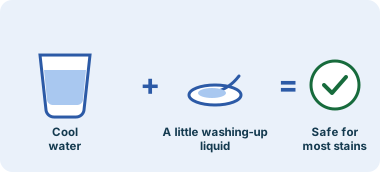
- Treat any mark with a teaspoon of washing-up liquid and a tablespoon of white vinegar in 250ml of cool water; dab and blot.
- Rinse with clean water and press dry.
- Repeat gently if a faint tide-mark remains.
Clay-heavy or iron-rich mud can leave a faint orange tinge that's tougher than ordinary garden soil, if so, that's a good one for a professional follow-up.
By surface
🧹 Carpets
Most of these marks end up on the carpet, and the method above is exactly what we use, just at professional strength with proper rinse-extraction. If it’s set in, over a large area or won’t shift, our carpet cleaning service lifts what home kits leave behind.
🛋️ Sofas & upholstery
Check the cushion's cleaning code first: W or W/S means the method above is fine used sparingly; S means solvent-clean only, so leave that to a professional. Use less water than on carpet and blot, don't soak.
🧶 Wool & delicate rugs
Take the rug outside if you can. Once the mud is bone dry, a good shake and a stiff brush get more out than any amount of wet cleaning. Use cool water and a gentle touch. Wool can ‘brown’ if over-wet and some rug dyes run. Test a hidden corner first, and for an antique, hand-knotted or silk rug, don't gamble. Leave it to us.
🛏️ Mattresses
Mud on a mattress dries quickly because nothing soaks far in, so let it dry completely, brush the crumbs into the vacuum and you'll usually only have a faint smudge left to dab. You can't rinse a mattress, so go light: blot, treat sparingly, then use bicarbonate of soda to absorb the rest. Never soak it. Trapped moisture leads to mould and smells.
✅ Do
- Let mud dry fully first
- Vacuum before you wet anything
- Blot from the outside in
- Test on a hidden patch first
🚫 Don't
- Clean wet mud (it smears)
- Rub the mark in
- Use hot water
- Over-wet the area
Tried it and the mud & dirt mark is still there, or it's a wool rug, a mattress or something you'd hate to ruin? Don't keep scrubbing; that's how a stain turns permanent. We can often draw out what's left with professional hot-water extraction, and we'll tell you honestly what we expect to get up before we start. We usually reply within 15 minutes, prices are fixed with no VAT (rooms from £20, £50 minimum call-out), and we can normally fit you in within two to three days, worth sending that photo sooner rather than later, as the longer a stain sits, the harder it is to lift. Watford family business (25 years' experience, fully insured) and if you're not happy with the result, we re-clean free. That's our 100% satisfaction guarantee.
Get my free quote 💬 WhatsApp us a photo of the stainCommon questions
Should I let mud dry before cleaning it off the carpet?
Yes. Mud is the one stain where waiting is exactly right. Cleaning it wet just smears it over a bigger area, whereas mud left to dry completely brushes loose and vacuums straight up, leaving only a light mark to treat. If it's very wet, lay kitchen roll on top to lift surface moisture, but don't rub.
How do you remove old, set-in mud stains from carpet?
Vacuum thoroughly first, more dried soil comes out than you'd expect, then work the vinegar and washing-up liquid solution in gentle, repeated passes, rinsing between each. Ordinary garden soil usually gives up this way. Clay-heavy or iron-rich mud can leave a stubborn orange tinge, though; that's one for a professional, and we'll tell you honestly whether it's likely to lift fully.
Why does the mud stain keep coming back after I clean it?
That's usually 'wicking'. Moisture draws soil trapped deep in the pile back up to the surface as the carpet dries, so the mark reappears a day later. Leftover detergent makes it worse, because sticky residue grabs new dirt. Rinse with clean water and blot as dry as you can; if the patch keeps returning, a professional hot-water extraction clean flushes out what's sitting beneath the surface.
More stain guides
- ← Back to the full Stain Removal Guide
- How to remove biro & ink
- How to remove felt-tip
- How to remove paint

Last updated July 2026